Monday, April 28, 2014

Congratulations to the Woodlands Researchers

Last Thursday the members of Professor Martinko’s Practicum class presented their research on the Woodlands Mansion in Philadelphia. The event drew a crowd of Villanova students and faculty, as well as a fair number of interested locals.

Nineteenth Century Print of the Woodlands Estate (Falvey Memorial Library)


Spread throughout the house and grounds, the students presented on the laborers and servants who inhabited the estate. From a variety of manuscript materials the class gave voice to the men and women whose lives were lost over time. From the stable hands and greenhouse laborers to cooks, laundresses, and house servants, the students painted a picture of an active estate and shed light on what we can learn from historic landmarks.

Hats off to Professor Martinko’s Practicum class for the hard work they put into their research and presentations of the Woodlands. I know I was not the only one to learn something about an under-appreciated Philadelphia landmark, and their efforts helped set a foundation for further research into a historic estate.


Monday, April 21, 2014

Vintage YouTube: British Pathé Uploads its Archives


On April 17, British Pathé made 85,000 historical movie clips and videos available on its YouTube channel.  The footage spans nearly a century, from the 1890s through the 1970s.  It includes anything from major news headlines, like the Hindenburg disaster and the death of Marilyn Monroe, to more slice-of-life snippets of Western culture, like a clip on a French flea circus from 1949 ("Next time, don't forget the DDT," the narrator reminds us).  The archive is also particularly strong in WWI and WWII footage.

In an interview on British Pathé's blog, Alastair White, general manager of the London-based media company, expressed his hopes that the project will bring history to a broader audience:  “Our hope is that everyone, everywhere who has a computer will see these films and enjoy them...this archive is a treasure trove unrivalled in historical and cultural significance that should never be forgotten. Uploading the films to YouTube seemed like the best way to make sure of that.”


Of course, historians recognize that while film can be a valuable source, it is also a potentially problematic one; viewers may be apt to see film as more objective, if not naked in its honesty.  British Pathé has given the world a highly valuable resource, yet its assertion that the clips should "never be forgotten" seems a vague and ambiguous goal.  Is it enough that this footage is simply out there for entertainment and enjoyment?  Is it a good first step, at least?  How can historians capitalize on it?


On a final, less serious note, YouTubers seem apt to use historical footage for inventive, entertaining purposes.  Two of my personal favorites are "Roots of Breakdance", starring Soviet soldiers backed by Run DMC, and "Hitler Sings 'The Jeffersons' Theme", which syncs Triumph of the Will footage with the theme song of the popular American TV show.  The British, coincidentally, were a bit ahead in 1941 with their comedy reel "Schichlegruber Doing the Lambeth Walk (Assisted by the Gestapo Hep-Cats)".  If there is any historical constant, it seems to be our need for humor now and again.


If you have used film footage in your research and/or teaching, please share your experiences with us.  And feel free to share your favorite historical (original or creatively modified) videos as well.


Friday, April 18, 2014

1964 New York World's Fair, 50 Years Later

To commemorate the fifty year anniversary of the 1964 New York World's Fair, the New York Times sought pictures and interviews from those who were there.

New York Times
Check out the article here to read about the memories of those who witnessed the Fair firsthand, experiencing Belgian Waffles, transportation of the future, and even an animatronic Abraham Lincoln.

The next world's fair, Expo 2015, is scheduled for next year in Milan, Italy. What celebrations of the present and future should we expect?

Thursday, April 10, 2014

Possible Postgraduate Career - Tattoo Quality Control

This week's cover of Rolling Stone features Julia Louis-Dreyfus with the United States Constitution printed on her back. But there is a rather embarrassing error.

Rolling Stone
Do you see their mistake?

Need a hint? Check out this article from the Philadelphia Daily News, which includes a response from the National Constitution Center.

Thursday, April 3, 2014

Villanova Students to Present Research on Local Historical Site

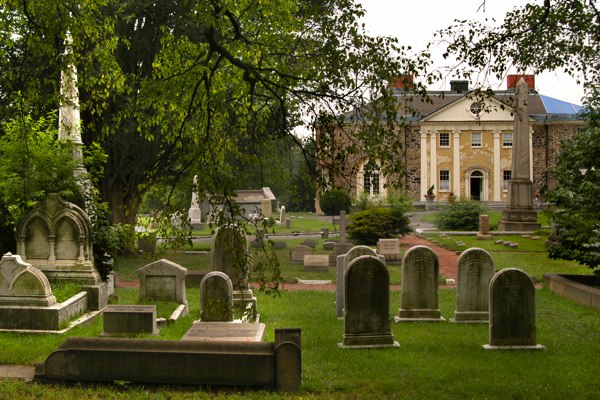
If you are like me, you might be a little embarrassed to admit that you do not know much about The Woodlands, a Revolutionary War era historical site right here in Philadelphia.

Woodlands Cemetery
visitphilly.com

Fortunately, a group of Villanova grad students have been spending the Spring Semester researching the history of the mansion and grounds, as well as those who lived and worked there. On the evening of April 24 they will be at The Woodlands sharing their discoveries about the site.

If are looking for a break from research papers, this is a great opportunity to come out to support grad students and learn more about the rich history of Philadelphia.

More information about the tours here.

Are you a student participating in this research project? We would love to get a sneak preview of some of the things you have been working on.


Wednesday, March 19, 2014

History Students to Present at Villanova's 25th Annual Elizabeth Cady Stanton Conference

On Friday, April 4, Villanova University will host its 25th annual Elizabeth Cady Stanton Conference.  The conference highlights research from a variety of disciplines, all connected by a focus on gender/women.  Everyone is invited and encouraged to attend.

Six* of our History M.A. students will present at the conference:

Haddi Bergstrom, "Feminization of Religion: Discourse and the Cult of the Domestic in 18th and 19th Century France"

Grant Carter, "Revolutionary Women: 1848, The Paris Commune, and Revolutionary Opportunities"

Shane Sprandio, "Cultural Memory: Anita Garbialdi in Literature and Art"

Hayley Stevenson, "The Cult of the Clitoris: British Imperial Culture and the Sexually Liberated Woman"

Christina Virok, "Heroine, Rhetorical Device, or Symbol of Conquest?: Examining Depictions of Muslim Women in the Literature of High Medieval France and England"

Alexandra Webster, "Second Among Equals: Gender and the 'Double Burden' in Soviet Female Enlistees' Great Patriotic War Memoirs"


*If I missed anyone, please let me know!

Tuesday, March 4, 2014

A Spectre Still Haunting: How Interrogating the Historically Inspired Rhetoric of the Ukrainian Crisis Can Help Us Be More Mindful Historians

Words are deceptive.  The existence of the dictionary, years of vocabulary exercises in our youth, and verbal GRE study cards suggest a stable, definite quality to our lexicon.  But “words,” as Slavoj Žižek reminds us, “are never ‘only words’.”  Words are neither static nor amorphous ‘things’, but nebulous and contested political, cultural, social, and historical spaces.  Words are not unlike a UFC match, where the ring’s cage-like barriers are seemingly fixed, but realistically flexible and sometimes violently permeable.  Within the ring, the forces of politics, culture, and society duke it out for the win: the power to manipulate and redefine the word to suit their respective purposes.  Sometimes, one champion reigns; other times, he becomes displaced.  The cycle is continuous and uncertain.  And it all occurs in front of a cheering and jeering audience that assesses and interprets the events playing out before them in myriad ways based on loyalties, desired outcomes, and the power of suggestibility. 
     
A few weeks ago, Anne Applebaum wrote an article for Slate showcasing the “smears, stereotypes, and clichés” commonly used in Ukrainian and Russian media and political rhetoric to define the crisis in Ukraine.  Applebaum lists seven of the most common: ‘fraternal assistance’, ‘anti-terrorist operation’, ‘coup d’etat’, ‘Nazi', 'fascist’, ‘ethno-linguistic divisions', and 'Yugoslav situation’.  Each has exceptional emotionally, culturally, and historically loaded connotations in Ukrainians' and Russians' living memories.  Applebaum further illustrates how these words and phrases are being re-purposed and utilized by a variety of politically-minded groups to rally popular support for themselves or popular antagonism against their ideological, social, and political foes, primarily through emotional pandering.  As the crisis deepens, these terms will become even more slippery and continue to transfigure and metamorphose.

But this Frankenstein-esque reanimation of words and phrases is not limited to Ukraine and Russia.  Western rhetoric is also complicit in constructing analogies and pandering to emotions based on national and cultural historical memory.  John Baird, Canada’s Foreign Affairs Minister, called Russia’s troop presence in Crimea “straight out of the Cold War.”  An op-ed piece in the New York Times referenced the threat Russia potentially poses to the “post-Soviet world”.  More recently, Western politics and media have been inclined toward a ‘Crimea as the new Sudetenland’ analogy, apparent in Baird’s interview and King’s piece.  The Huffington Post and The Australian also ran articles with this analogy at the forefront.  And then there are the oft-referenced bits about ‘democracy’ and ‘freedom’, the ultimate American stereotypes and clichés.  This is perhaps best illustrated by US Secretary of State John Kerry's assessment of the Ukrainian mood during his recent visit to Kyiv: “It is universal, it is unmistakable,this call for freedom.” Yet Ukraine’s provisional government’s attempted elimination of a law allowing official representation of regional, minority languages is a keen example of how words are politically and culturally constructed battlegrounds.  It begs the question of what, exactly, ‘freedom’ and 'democracy' mean in this context, and to and for whom.

“Words matter,” as Žižek reiterates. 

It is often said that the past informs the present.  But we can also use the present to reflect upon the past in our work as historians.  In your own research, how much attention do you give to words, their meanings, applications, and intents -- and the nuances within those spaces?  How often do you consider what words mean in a specific context or source?  How conscious are you of your own cultural associations and biases against a word or phrase?  How much thought do you give to the historical and/or cultural distance between yourself and the word you’re trying to define?  Have you ever discovered indeterminateness in the use and meaning of words and phrases where you expected stability?

Sunday, February 23, 2014

Alumni Spotlight: Tom Foley

The first graduate in our ongoing series "The Real World: Villanova History" is Tom Foley. Tom, a 2013 graduate, is currently at Georgetown University pursuing his doctorate in history.

Tell us a little about your academic background and interests. 

[Note: Tom failed to mention that he did his undergraduate work at Notre Dame. As a fellow Domer I think it is my obligation to point that out.] I graduated from the M.A. program in history at Villanova in 2013.  Prior to starting the program in 2011, I worked in a legislative research office within state government.  While at Villanova, I had the good fortune of working on the Emilie Davis Diaries project led by Dr. Giesberg.  It is difficult to overstate the value of that experience, which continues to inspire my historical interests.

What are you up to now?

I am a first-year doctoral student at Georgetown University and am studying 19th century United States history with a focus on the intersection of gender and politics in the Civil War era.  I am also interested in the history of energy and the environment, digital public history, and the relationship between history and literature.  

How did your experiences at Villanova prepare you for a PhD program?

The rigorous coursework and high standard to which faculty hold students challenged me and pulled me from familiar themes.  The passion for history among students and faculty was always palpable, and keeping that fire stoked and well-fueled is essential in all graduate studies.
  
What advice do you have for current Masters students also considering pursuing a PhD?

If you are considering a PhD program in any field, consider developing your language skills.  Most PhD programs require an advanced level of competency.  For example, at Georgetown, all students must pass one language exam and all those in non-U.S. fields must pass at least one additional language that pertains to their research.  Many excellent opportunities exist at Villanova and throughout the Philadelphia area to build your language skills.

Additionally, contact faculty members and current graduate students at PhD programs that interest you.  Talk to your Villanova professors, as they can often provide a valuable introduction to a former colleague, classmate, or student.  It is vital not only to obtain a good understanding of what the program offers, how it perceives itself, and how it survives and thrives within the university community.  Email and then visit the programs and people you are drawn to, if practicable.  The worst that can happen is your email (and follow-up email) goes unanswered in which case you have still learned something valuable about that program. 

Finally, edit, edit, ask others to read and review, and edit all essays, applications, and even emails you send to potential programs.  In other words, continue to practice being good scholars!

Special thanks to Tom Foley for taking the time to answer a few questions and provide advice to students following in his footsteps. 

Have more questions for Tom? Contact him here.

Are you or do you know a Villanova graduate willing to offer advice to fellow Masters students? Please contact us, and we would love to be in touch.

Thursday, February 20, 2014

Downton vs. du Pont: A look into the historical costumes of Downton Abbey coming soon to Winterthur


 When I was first introduced to Downton Abbey I spent an entire day watching episodes until I was thinking in a British accent and staring at my empty bottle of wine wondering where my bell was to call up Mr. Carson to fetch me another. From the moment Maggie Smith’s character, Countess Violet Crawley, in the very first episode, uttered the words, “What are week-ends?” I knew I was hooked. While many of us are still trying to cope with the loss of Mary and Matthew’s love scenes, Winterthur Museum, owned by the du Pont family, has managed to bring a bit of our love for the iconic show to their historic home in Delaware. 


Beginning March 1, 2014, forty of the best fashion moments from Downton will be on display at Winterthur.  While the styles are not completely historically accurate it is interesting to view the contrasts between styles of the early 20th century with their modern influences. The creators of Downton actually took vintage fragments of garments and incorporated them with new fabric in order to create the styles seen on the show. As a historian the exhibit offers a chance to contrast American High Society to the Downton way of life. English aristocracy of the 1920’s and 30’s seemed to have an aversion to new technology and ways of life, and this is a constant theme in the show as Mrs. Patmore, the cook, continues to argue that she likes the way things are and she does not appreciate the new technology bugging her in the kitchen. The opposite was true for the du Pont family as modernity and comfort were central in the creation of Winterthur during the same time period. Unlike Downton, Winterthur boasted an elevator and telephones as well as refrigerators and a heated swimming pool. In addition, the exhibit will also host a number of costumes worn by the staff at Downton as well as the staff at Winterthur to see how each were an integral part of the families lives. 

The fashion on display at Winterthur ranges from breakfast attire, to staff outfits, to evening wear. There will also be the more memorable looks such as Lady Sybil Crawley’s blue harem outfit, and Matthew Crawley’s tweeds and that adorable jeff cap. I mean is there anything better than a nice Matthew outfit? I digress on the outfits; yet if this all sounds as wonderful to you as it does to me then visiting Winterthur should be your next stop in learning more about the early 20th century fashion and lifestyle. Lastly, if you have been living in a bubble and have no idea what I am talking about I suggest you go buy a bottle of wine (priorities first), and  find Downton Abbey pronto in order to view a very successful drama on English Society during the post-Edwardian era.

For more information please visit the Winterthur website

Monday, February 17, 2014

A New Mount Rushmore for Presidents' Day

Ever wonder what a revised Mount Rushmore might look like? 

                                                                                                                                        (Funny or Die)
No, not this revised view.

To honor Presidents' Day, Franklin's Opus asked a panel of historians, including Villanova's own Professor Marc Gallicchio, to rank America's Presidents on faithfulness to the Constitution, promotion of liberty, and leadership. 

Check out the results of the survey. Who made the new Mount Rushmore? Who would you have put on the monument?

Also, think you know Presidential trivia? Check out their Presidents' Day Quiz to find out!