 |
| Photo by Dr. Judy Gieberg |
As a result of their many actions, the Freedmen’s Bureau left a massive collection of records. The National Archives began microfilming the records in the 1970s, but due to lack of funding were forced to stop. Fortunately they resumed their efforts in 2000 after Congress passed the Freedmen's Bureau Records Preservation Act. Today most, though not all, of the Bureau’s records are available on microfilm.
In her presentation, Stevens demonstrated some of the many resources included in the Bureau’s records, documents such as censuses, marriage records, various economic records, school reports, legal documents, and records of abandoned lands. The vastness of the Bureau records is overwhelming, which is why Stevens stresses to researchers that working in the collection is a slow process, not a sprint.
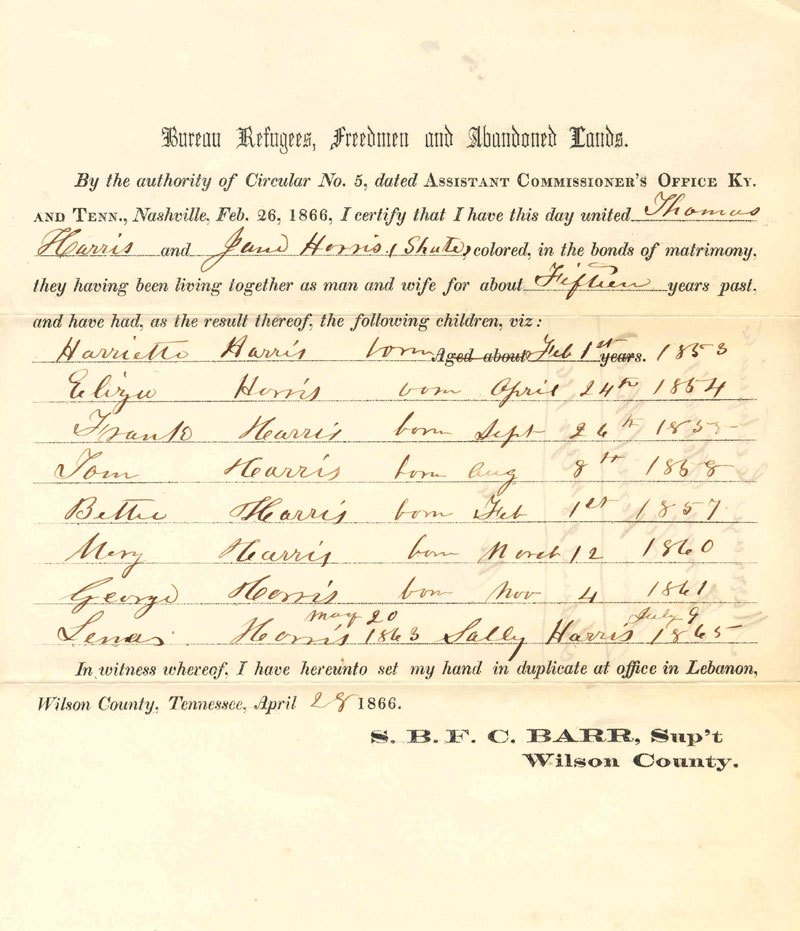 |
| Despite living as man and wife for fifteen years and having nine kids, the marriage of Thomas and Jane Harris was not legally recognized until 1866. (National Archives) |
The records of the Freedmen’s Bureau could certainly be a valuable source of research for those interested in the era of the Civil War and Reconstruction. It could also be a great genealogical tool, as Stevens herself is using it to try to trace her family history.
The final piece of advice from the presentation was to consult the National Archives page on the Freedmen’s Bureau as well as a finding aid created by the office in Atlanta to check out which states have which records. Although active throughout the South, the records of the Bureau varied by state.
Overall, the presentation was insightful and made potential research in the Freedmen’s Bureau records seem a little less daunting. Of course, those eager to jump right in with a visit to the National Archives office in Philadelphia will have to wait, as they are preparing to move to a new location.

No comments:
Post a Comment